
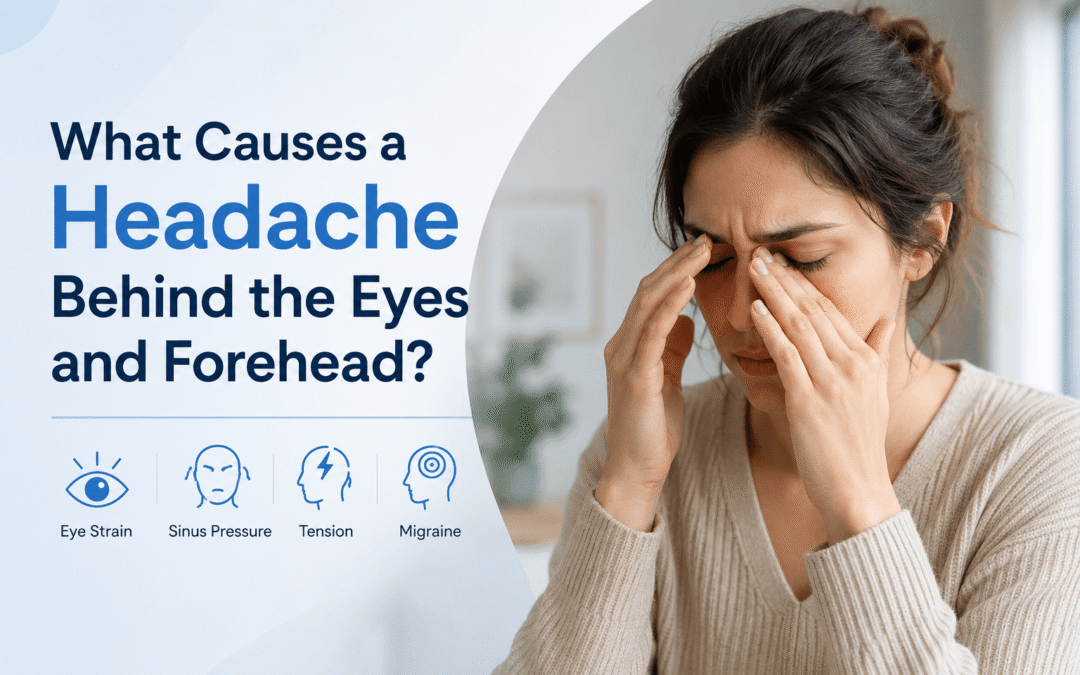
Headache Behind the Eyes and Forehead
A headache behind the eyes and forehead can happen for several reasons, including migraine, tension-type headache, sinus pressure, eye strain, cluster headache, or neck-related headache.
The location of the pain can offer clues, but it does not confirm the cause on its own.
If headaches are frequent, severe, changing, or affecting your daily life, it may be time to speak with a physician. At Infiniti Medical Headache & Migraine Clinic in NW Calgary, patients can access referral-based assessment for headache and migraine concerns.
Common Causes of a Headache Behind the Eyes and Forehead
Pain behind the eyes and across the forehead is common, but it can feel different from person to person. Some people describe pressure, tightness, throbbing, stabbing pain, or a heavy feeling around the brow and eyes.
Migraine
Migraine is a neurological condition that can cause moderate to severe head pain. It may be felt around the forehead, temples, behind one eye, or on one side of the head.
A migraine attack may also include sensitivity to light, sound, or smells; nausea; blurred vision; worsening pain with activity; and fatigue before or after the headache.
If symptoms sound like migraine, learn more about care options through Infiniti Medical’s headache clinic in Calgary.
Tension-Type Headache
Tension-type headache often feels like pressure, tightness, or a band around the forehead, temples, or back of the head. It may also cause discomfort behind the eyes.
Possible contributing factors include stress, poor sleep, jaw clenching, neck or shoulder tension, long periods at a desk or screen, dehydration, or skipped meals.
Sinus Pressure or Sinusitis
Sinus-related headache can cause pressure in the forehead, cheeks, bridge of the nose, or around the eyes. It is often linked with nasal symptoms such as congestion, thick discharge, reduced sense of smell, or facial pressure that worsens when leaning forward.
Not every forehead headache with pressure is caused by the sinuses. Many “sinus headaches” may actually be migraine or another headache disorder.
Eye Strain
Eye strain can lead to aching around the eyes, forehead discomfort, and a heavy or tired feeling after prolonged visual focus. Long screen use, dry eyes, poor lighting, or uncorrected vision changes may contribute.
Cluster Headache
Cluster headache is less common but can cause intense pain around or behind one eye, usually on one side. Attacks may happen in cycles and may include tearing, redness, nasal congestion, or restlessness.
Because cluster headache can be very painful and may require specific care, assessment at a dedicated headache and migraine clinic may be helpful after referral.
Neck-Related or Cervicogenic Headache
A headache behind the eyes and forehead may sometimes be influenced by the neck, especially if pain worsens with certain movements or is associated with neck stiffness.
When Should You Seek Medical Help?
Seek urgent medical attention if a headache is sudden and severe, follows a head injury, or comes with symptoms such as weakness, confusion, fainting, fever with stiff neck, vision loss, trouble speaking, or a new neurological symptom.
You should also speak with a healthcare provider if headaches are becoming more frequent, the pattern has changed, pain is interfering with daily life, or you need pain medication often.
Seek Urgent Care If Symptoms Are Severe
Do not wait if you have a sudden severe headache, weakness, confusion, fainting, fever with stiff neck, vision loss, trouble speaking, symptoms after head injury, or any new neurological symptom.
How Doctors Assess Headache Behind the Eyes and Forehead
A headache assessment usually begins with a detailed history. Your physician may ask where the pain is located, how often headaches happen, how long they last, what the pain feels like, and whether symptoms such as nausea, light sensitivity, congestion, dizziness, or visual changes occur.
Keeping a headache diary can help. Track headache days, pain location, severity, possible triggers, medication use, and symptoms.
Treatment Depends on the Cause
Treatment for a headache behind the eyes and forehead depends on the headache type and the person’s medical history. Options may include lifestyle changes, trigger management, acute medication, preventive medication, procedures, or other therapies.
Infiniti Medical provides referral-based care for a range of headache concerns, including chronic migraine, tension headache, cluster headache, cervicogenic headache, medication overuse headache, and chronic daily headache. You can learn more about the clinic’s approach here: Infiniti Medical Headache Clinic.
FAQ
What does a headache behind the eyes and forehead mean?
It may be related to migraine, tension headache, sinus inflammation, eye strain, cluster headache, or neck-related headache. The location helps guide assessment, but it does not confirm the diagnosis.
Can sinus pressure cause pain behind the eyes and forehead?
Yes. Sinus inflammation can cause pressure in the forehead, face, and around the eyes, especially with nasal congestion or discharge. However, migraine can feel similar, so persistent or recurring symptoms should be assessed.
Is a headache behind the eyes a migraine?
It can be. Migraine may cause pain behind one eye, across the forehead, or on one side of the head. Light sensitivity, nausea, worsening with activity, or recurring attacks may suggest migraine, but a clinician should confirm the cause.
When is a headache behind the eyes serious?
Seek urgent care if the headache is sudden and severe, follows trauma, or occurs with weakness, confusion, fainting, fever with stiff neck, vision loss, trouble speaking, or new neurological symptoms.
How can I get assessed for recurring headaches in Calgary?
A family physician can help determine next steps and may provide a referral when specialized headache care is appropriate. Infiniti Medical’s Headache & Migraine Clinic in Calgary requires a physician referral.
Need Assessment for Recurring Headaches?
Infiniti Medical’s Headache & Migraine Clinic in NW Calgary provides referral-based assessment for headache and migraine concerns.
Visit the Headache & Migraine Clinic Page