
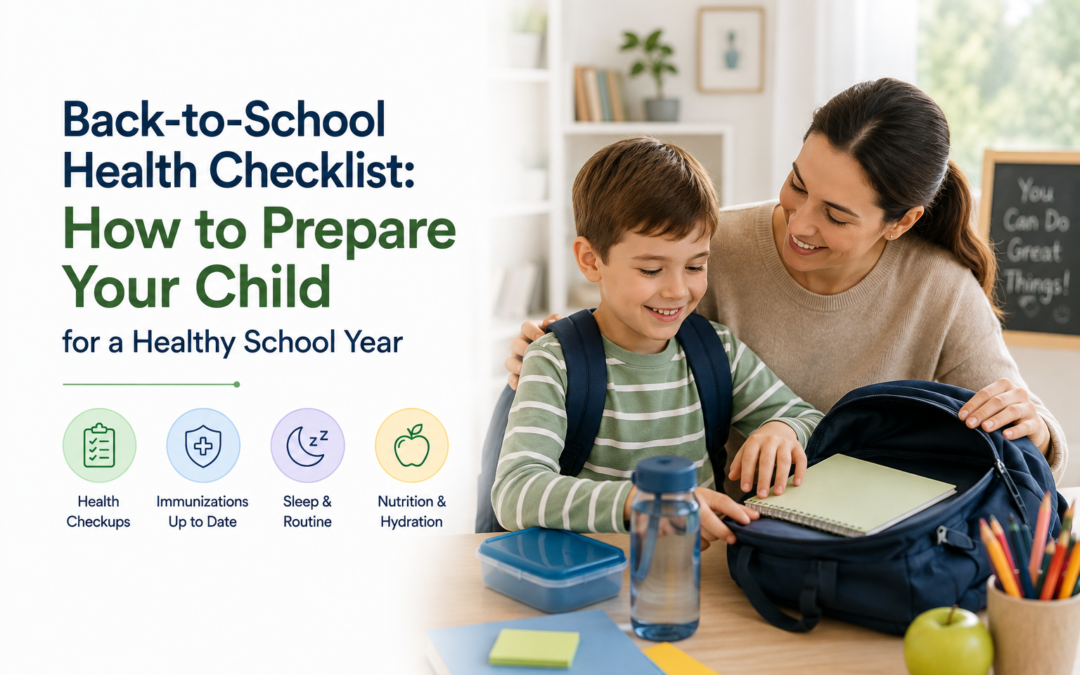
A back-to-school health checklist can help families prepare for more than new classes and school supplies. Before the first day, review your child’s immunizations, sleep routine, medications, vision, hearing, nutrition and emotional well-being.
Children with asthma, severe allergies, diabetes, seizures or other ongoing conditions may also need an updated care plan for school. Preparing this information early can help teachers and school staff understand your child’s needs.
Quick answer: Begin preparing two to four weeks before school starts when possible. Gradually reset sleep and meal schedules, review health concerns, confirm that emergency contacts are current and arrange medical appointments for unresolved symptoms or ongoing conditions.
Back-to-School Health Checklist at a Glance
Use this checklist to organize your child’s health needs before the school year:
- Review your child’s immunization record.
- Book a health visit if your child has ongoing or unresolved concerns.
- Confirm that prescription medications and school forms are current.
- Update asthma, allergy, seizure or diabetes care plans when applicable.
- Arrange vision, dental or hearing assessments when needed.
- Gradually move bedtime and wake-up time back to the school schedule.
- Plan breakfasts, lunches, snacks and water.
- Make time for daily physical activity.
- Discuss worries, friendships, bullying and school transitions.
- Review handwashing and respiratory hygiene.
- Check backpack size, fit and weight.
- Update the school’s emergency contact and health information.
Not every child needs a medical examination before each school year. A health professional can advise whether a checkup is appropriate based on age, symptoms, development, medical history and school requirements.
1. Decide Whether Your Child Needs a Checkup
A routine medical examination is not automatically required every September. However, a visit may be helpful if your child:
- has an ongoing medical condition;
- takes prescription medication;
- needs a school health form completed;
- is starting a new school or activity with medical requirements;
- has not had recommended preventive care;
- has concerns about growth or development;
- is experiencing sleep, mood or behaviour changes;
- has frequent headaches or stomach aches;
- has difficulty breathing during activity;
- has unexplained fatigue or weight changes; or
- has symptoms affecting attendance or learning.
Infiniti Medical Clinic provides paediatric care in Calgary focused on growth, development, preventive care and common childhood health concerns.
Seek care when symptoms arise rather than waiting for the beginning of the school year.
2. Review Immunizations
Immunizations can help protect children and school communities from preventable illnesses. Check your child’s records before school starts so there is time to identify missing doses.
In Alberta, routine school immunization programs are offered in Grades 1, 6 and 9. Public health reviews student records and sends information and consent forms home when a vaccine is recommended. Children will not receive a school vaccine without consent from a parent or legal guardian.
Additional immunizations may be recommended based on:
- the child’s age;
- previous doses;
- health conditions;
- travel;
- missed school vaccination appointments; or
- changes to provincial recommendations.
Parents and caregivers can contact Health Link at 811 or their local public-health office for information about Alberta’s immunization schedule and records.
A medical clinic can help discuss health questions related to immunization, but the availability and administration of specific vaccines may depend on Alberta public-health programs.
3. Update the School About Medical Conditions
If your child has an ongoing health condition, make sure the school has clear, current information.
Relevant conditions may include:
- asthma;
- severe allergies or risk of anaphylaxis;
- diabetes;
- epilepsy or seizures;
- heart conditions;
- attention-deficit/hyperactivity disorder;
- mobility or physical limitations;
- migraines;
- mental-health conditions; or
- another condition that may affect participation or require emergency support.
Ask the school which forms are required and who should receive them. Confirm that the school knows:
- the condition’s common symptoms;
- what may trigger or worsen symptoms;
- which activities require accommodations;
- where medication will be stored;
- who is authorized to administer or supervise medication;
- what to do in an emergency; and
- who should be contacted.
Information should be shared through the school’s approved process rather than informal messages that may be missed.
4. Check Prescriptions and School Medications
Do not wait until the first day of school to discover that medication has expired or a form is missing.
Before school begins:
- check expiry dates;
- confirm that labels are readable;
- request prescription renewals when medically appropriate;
- ask the school about medication policies;
- confirm whether medication must remain in its original pharmacy container;
- ensure instructions match the current prescription;
- provide emergency medication as required; and
- review whether an older child is permitted and prepared to carry medication.
Never change a medication dose for the school schedule without speaking with the prescriber.
Children who use asthma inhalers, epinephrine auto-injectors or other emergency medication should understand their care plan at an age-appropriate level. Teachers, coaches and caregivers should know how to access help.
Infiniti Medical Clinic’s family practice and walk-in services can assess non-emergency health concerns and review prescriptions when clinically appropriate.
5. Prepare an Asthma or Allergy Action Plan
Asthma and serious allergies require preparation because symptoms can occur during class, physical education, recess, field trips or sports.
For asthma, review:
- usual symptoms and triggers;
- prescribed controller and reliever medications;
- inhaler and spacer technique;
- where rescue medication will be kept;
- exercise-related instructions; and
- when staff should call 911.
For severe allergies, review:
- known allergens;
- possible symptoms of anaphylaxis;
- food and classroom precautions;
- the location of epinephrine auto-injectors;
- the emergency plan; and
- when to call 911.
An emergency plan should be individualized by a qualified health professional. It should not rely on a generic online medication schedule.
6. Arrange a Vision Check
Children may not realize that their vision has changed. Vision difficulties can affect reading, concentration, participation and classroom comfort.
Possible signs of a vision concern include:
- squinting;
- sitting very close to screens or books;
- covering one eye;
- frequent eye rubbing;
- headaches during reading;
- losing their place while reading;
- avoiding close-up work;
- difficulty seeing the board; or
- a noticeable eye turn.
Alberta Health Services recommends having a child’s vision tested before kindergarten and regularly during the school years. Alberta coverage and eligibility for eye examinations should be confirmed through current provincial information or an optometry provider.
A school vision screen, when available, does not always replace a comprehensive eye examination.
7. Consider Hearing and Speech Concerns
Hearing or speech difficulties may be mistaken for inattention, behaviour problems or poor school performance.
Speak with a health professional if your child:
- frequently asks people to repeat themselves;
- turns the volume up unusually high;
- does not respond consistently when called;
- has unclear speech for their developmental stage;
- struggles to follow verbal instructions;
- has recurring ear infections; or
- shows a decline in school participation.
A physician can assess possible medical causes and determine whether referral to an audiologist, speech-language pathologist or another provider may be appropriate.
8. Schedule Dental Care
Dental pain can affect sleep, eating, concentration and school attendance. Arrange dental care if your child is due for a checkup or has:
- tooth pain or sensitivity;
- bleeding or swollen gums;
- a broken tooth;
- visible cavities;
- persistent bad breath;
- mouth sores that do not heal; or
- difficulty chewing.
Encourage brushing twice daily with fluoride toothpaste appropriate for the child’s age and dental guidance. Pack water rather than sugary drinks when possible.
Medical clinics do not replace dental care. Contact a dentist for routine oral-health examinations and treatment.
9. Reset the School Sleep Schedule
Late bedtimes and wake-up times can become common during summer. A sudden change on the first school morning may leave children tired, irritable or unable to concentrate.
Start adjusting the schedule gradually, ideally one or two weeks before school begins:
- Move bedtime and wake-up time earlier in small steps.
- Keep wake-up time consistent, including on weekends when practical.
- Create a predictable bedtime routine.
- Reduce stimulating screen use before bed.
- Keep the bedroom quiet, comfortable and dark.
- Avoid caffeine-containing drinks, especially later in the day.
Canadian movement guidance recommends approximately:
- 9–11 hours of sleep per night for children ages 5–13; and
- 8–10 hours per night for youth ages 14–17.
Sleep needs vary. Speak with a health professional if your child snores loudly, pauses while breathing, has persistent insomnia or remains very sleepy despite enough time in bed.
10. Plan Balanced School Meals and Snacks
Children need regular access to food and water to support growth, energy and concentration.
Canada’s Food Guide recommends including a variety of:
- vegetables and fruits;
- whole-grain foods; and
- protein foods.
A practical school lunch might combine one item from each group. Involve your child in planning and packing food when age-appropriate. Participation may help children develop food skills and identify choices they are more likely to eat.
Consider:
- your child’s appetite;
- cultural food preferences;
- budget;
- available preparation time;
- food safety;
- school allergy policies; and
- whether refrigeration or reheating is available.
If lunch frequently returns uneaten, ask your child why. They may dislike the food, have too little time to eat, find packaging difficult to open or feel uncomfortable eating around classmates.
Avoid labelling foods as “good” or “bad.” Focus on variety, regular meals and a supportive relationship with food.
11. Encourage Daily Physical Activity
Physical activity supports physical health, mood, sleep and social connection. Current Canadian guidance recommends that children and youth ages 5–17 work toward at least 60 minutes of moderate-to-vigorous physical activity each day.
Activity can include:
- walking or cycling to school when safe;
- active play;
- physical education;
- organized sports;
- dancing;
- swimming;
- playground time; or
- family activities.
Children do not need to complete all activity at once. Movement can accumulate throughout the day.
Speak with a health professional if exercise repeatedly causes chest pain, fainting, unusual shortness of breath or significant wheezing. Call 911 for severe symptoms.
12. Discuss Mental Health and School Worries
Returning to school can bring excitement, anxiety or both. Children may worry about new teachers, friendships, academic expectations, bullying or being away from home.
Create opportunities to talk without forcing the conversation. Helpful questions include:
- What are you looking forward to?
- Is anything about school worrying you?
- Who could you talk to if you needed help?
- What would make the first week feel easier?
- Is there anything you want your teacher to know?
Possible signs that a child needs more support include:
- persistent sadness or irritability;
- frequent stomach aches or headaches without a clear cause;
- difficulty sleeping;
- school refusal;
- loss of interest in usual activities;
- marked changes in eating;
- falling grades;
- social withdrawal; or
- intense worry that interferes with daily life.
Book an assessment when these changes are persistent, worsening or affecting functioning. Seek urgent help if a child talks about self-harm, suicide or not wanting to live. Call 911 when there is an immediate risk of harm.
13. Practise Illness Prevention
Schools bring many children into shared spaces, making respiratory and stomach illnesses common.
Encourage your child to:
- wash hands with soap and water;
- use hand sanitizer when appropriate;
- avoid touching their eyes, nose and mouth with unwashed hands;
- cover coughs and sneezes with a tissue or elbow;
- avoid sharing water bottles, utensils and lip products; and
- stay home when required by school or public-health guidance.
Label water bottles, lunch containers and personal items to reduce mix-ups.
Ask the school about its current illness and attendance policies. These may change depending on the infection or public-health recommendations.
14. Choose and Pack a Backpack Safely
A backpack should fit the child rather than being selected only by appearance.
Look for:
- two wide, padded shoulder straps;
- a padded back;
- a size appropriate for the child;
- multiple compartments to distribute weight; and
- a waist or chest strap when helpful.
Pack heavier items close to the child’s back. Remove unnecessary books and supplies regularly. Encourage your child to use both shoulder straps.
Persistent back, neck or shoulder pain should be assessed rather than assumed to be caused only by the backpack.
15. Update Emergency Contacts
Confirm that the school has accurate:
- parent and caregiver phone numbers;
- backup emergency contacts;
- home address;
- physician or clinic information when required;
- medical conditions and allergies;
- medication instructions; and
- preferred hospital or emergency information, if requested.
Tell the school promptly if contact or medical information changes during the year.
When Should You Book a Back-to-School Medical Visit?
Consider booking a visit if your child:
- has a chronic condition that needs review;
- requires medication or school forms;
- has unresolved symptoms;
- is behind on preventive care;
- has growth or developmental concerns;
- experiences frequent headaches or stomach aches;
- has difficulty sleeping;
- is struggling with mood, anxiety or school avoidance;
- becomes unusually short of breath during activity; or
- needs follow-up after an illness or injury.
Not every concern requires a full physical examination or routine blood work. The physician can focus the visit on your child’s actual needs.
Frequently Asked Questions
Does every child need a checkup before school starts?
No. A medical examination is not automatically required every school year. A visit may be helpful when a child has ongoing conditions, unresolved symptoms, medication needs, developmental concerns or school forms to complete.
What should be included in a back-to-school health checklist?
The checklist should include immunizations, medications, health action plans, vision, hearing, dental care, sleep, nutrition, physical activity, mental health, emergency contacts and school health forms.
How early should families start preparing for school?
Starting two to four weeks before school may provide enough time to adjust sleep routines, review health records and arrange appointments. Families can still work through the checklist after school begins.
How much sleep does a school-aged child need?
Canadian guidance recommends 9–11 hours per night for children ages 5–13 and 8–10 hours for youth ages 14–17. Individual sleep needs may vary.
What medical information should the school receive?
Share information the school needs to support the child safely, including serious allergies, asthma, diabetes, seizures, emergency medication and relevant activity restrictions. Use the school’s approved forms and processes.
When should a child stay home from school?
Follow the school’s current illness policy and public-health guidance. A child may need to stay home when they have symptoms that make participation difficult, require more care than the school can provide or could expose others to a communicable illness.
Prepare for School With Infiniti Medical Clinic
A thoughtful back-to-school health checklist can help families identify concerns before they interfere with attendance, learning or participation.
Infiniti Medical Clinic provides family medicine, paediatric care and walk-in services for non-emergency concerns in Northwest Calgary. Services are based on clinical assessment, physician availability and patient needs.
Book an appointment or call 403-460-4502 to confirm availability.
This article provides general educational information and does not replace individualized medical advice, diagnosis or treatment. Call 911 for severe breathing difficulty, signs of anaphylaxis, loss of consciousness or another medical emergency.
Medical Sources
- Alberta Health Services: Back-to-School Health Resources
- Alberta Health Services: Back-to-School Health Checklist
- Alberta Health Services: School Health Program
- Health Canada: Healthy Eating at School
- Government of Canada: Physical Activity for Your Health
- Government of Canada: 24-Hour Movement Guidelines for Children and Youth